All Purpose Flour Is Plain Flour

So, you're baking, and you're wondering, what's the difference between all-purpose flour and plain flour? Honestly, not much! They're basically the same thing, just with diffe...
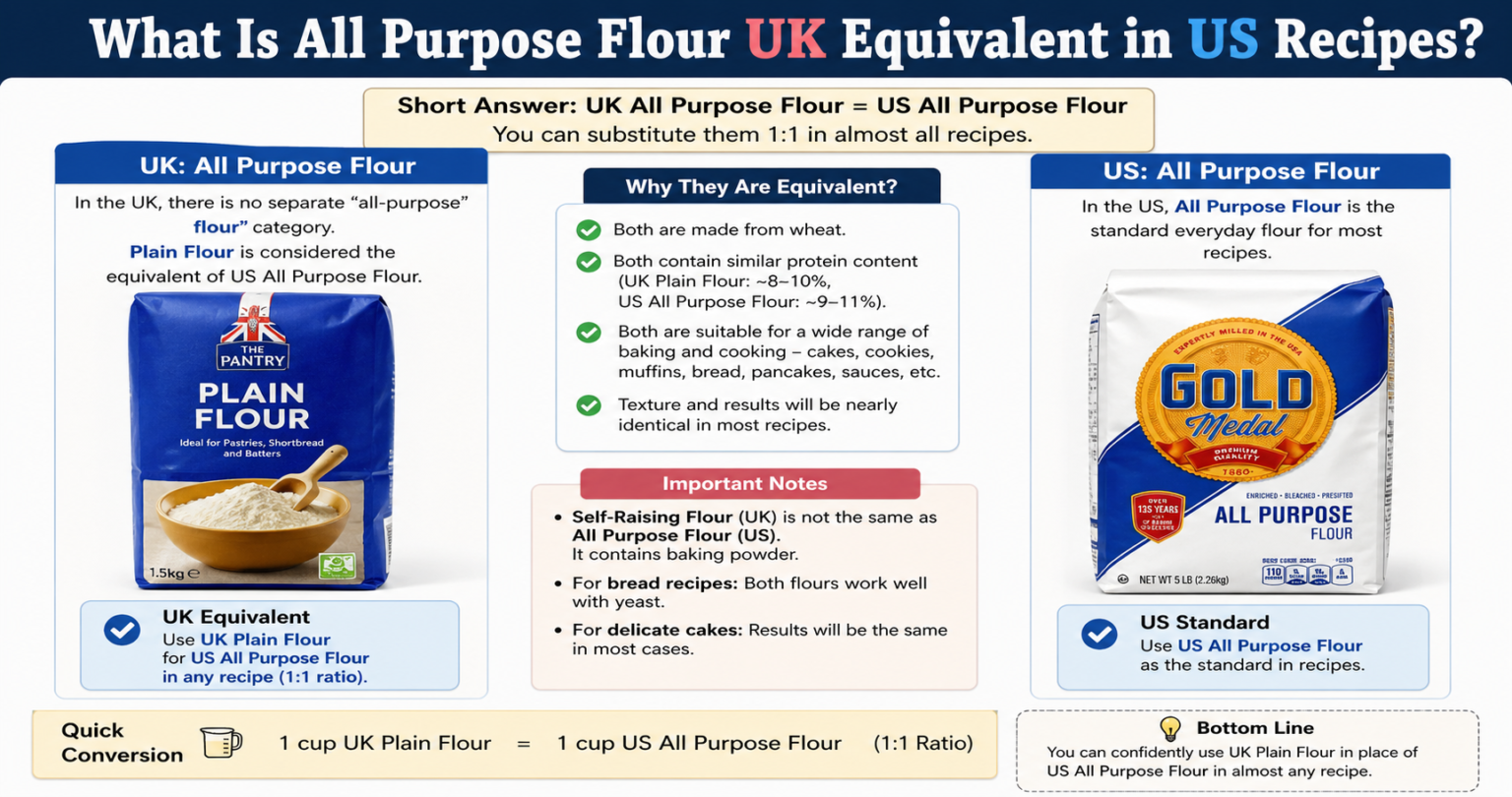
So, you're baking, and you're wondering, what's the difference between all-purpose flour and plain flour? Honestly, not much! They're basically the same thing, just with different names in different parts of the world.
In the US, it's all about all-purpose flour, while in the UK, Australia, and other countries, you'll find plain flour on the shelves.
But why the confusion?
It's probably because of the way different regions label their products.I mean, think about it, all-purpose flour is a pretty straightforward name, right? It implies that the flour is, well, good for everything. And that's mostly true, except when it's not, like when you're making bread or pasta, and you need a special type of flour.
Must Read
The Lowdown on All-Purpose Flour
So, what exactly is all-purpose flour? It's a blend of hard and soft wheat that's designed to be, you guessed it, all-purpose. It's got a neutral flavor and a medium protein content, which makes it perfect for baking, cooking, and even making sauces.
Now, I know what you're thinking, "Is all-purpose flour the same as cake flour?" And the answer is, nope. Cake flour has a lower protein content and is designed specifically for baking cakes and other delicate treats. So, don't even think about substituting all-purpose flour for cake flour, trust me, it won't end well.
But, let's get back to plain flour. Like I said, it's the same as all-purpose flour, just with a different name. It's got the same medium protein content and neutral flavor, and it's just as versatile.
 Is All-Purpose Flour the Same as Plain Flour?
The Benefits of Using All-Purpose Flour
So, why use all-purpose flour at all? Well, for starters, it's easy to find in most grocery stores, and it's usually pretty affordable. Plus, it's a great all-rounder, so you can use it for baking, cooking, and even thickening sauces.
And, let's not forget about the convenience factor. With all-purpose flour, you don't need to worry about having a million different types of flour on hand. You can just use one type of flour for most of your baking and cooking needs.
Now, I know some of you are thinking, "But what about bread flour? Or pasta flour?" And yeah, those are specialty flours that are designed for specific tasks. But, for most of us, all-purpose flour is more than enough.
 Bread Flour vs Self-Rising Flour: What're The Differences
Tips and Tricks for Using All-Purpose Flour
So, how do you get the most out of your all-purpose flour? For starters, make sure you're storing it properly. You don't want your flour to go stale or absorb moisture from the air. And, when you're baking, make sure you're using the right ratio of flour to liquid.
And, don't even get me started on sifting. I mean, do you really need to sift your flour? Probably not, unless you're baking a cake or something that requires super-fine flour. But, for most recipes, a quick whisk will do the trick.
So, there you have it, folks. All-purpose flour is the ultimate kitchen staple. It's versatile, convenient, and easy to use. And, whether you call it all-purpose flour or plain flour, it's still the same great stuff.
Thanks for chatting with me about all-purpose flour. I hope you learned something new, and I hope you're as excited as I am about the possibilities of this amazing ingredient. Happy baking and cooking, and don't forget to share your favorite recipes with me!
